

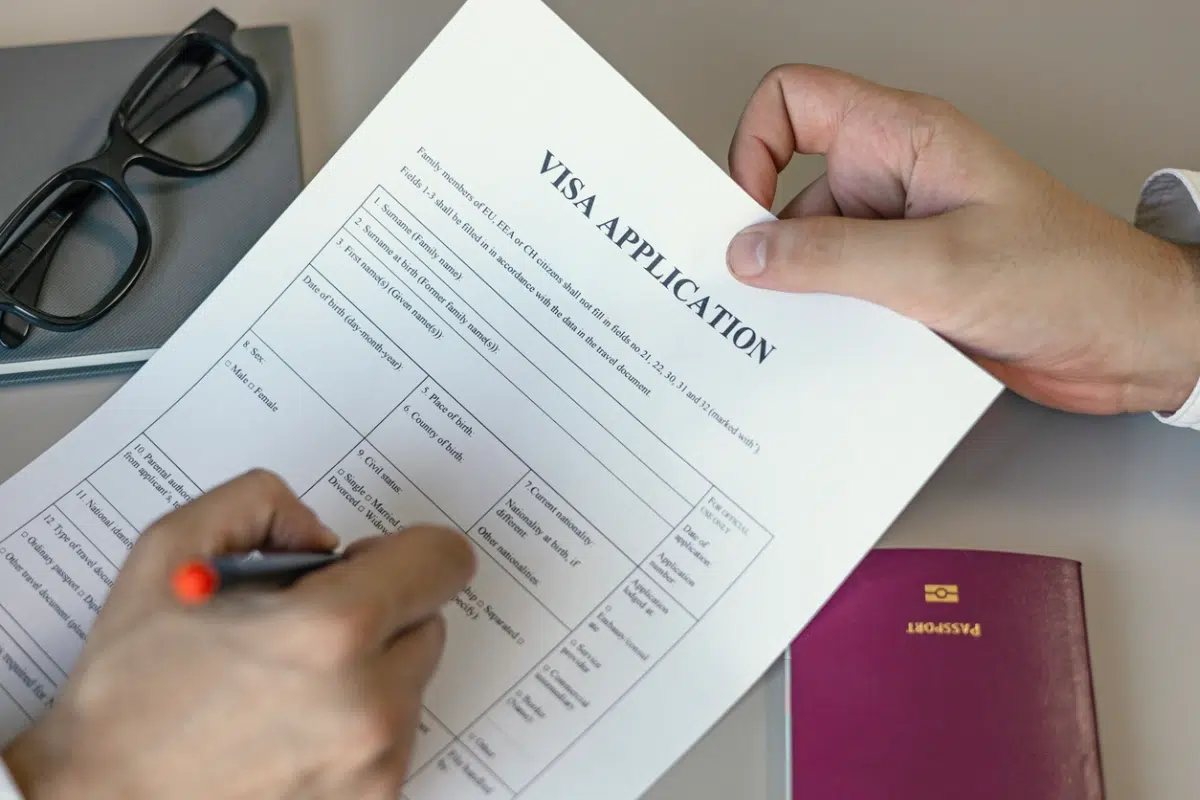

If your spouse lives outside the United States, consular processing allows them to apply for a marriage-based immigrant visa before entering the country. Although the process involves multiple government agencies and extensive documentation, careful preparation can help avoid delays and improve the chances of approval.
U.S. citizens and lawful permanent residents may sponsor their spouses through family-based immigration processes that can ultimately lead to permanent residence and eventual citizenship.
Depending on how long the couple has been married at the time of U.S. entry, the foreign spouse will receive either:
- CR1 visa (conditional permanent residence) if the marriage is under two years, or
- IR1 visa (immediate relative permanent residence) if the marriage is over two years
These are commonly referred to as CR1 and IR1 marriage-based green cards.
Understanding Consular Processing of Marriage Green Cards From Outside the U.S.
Prospective immigrants have two options for filing their immigrant visa application forms. They can file them inside the U.S. after entering the country or from their home country before entering. When an immigrant files from before entering the U.S., the process is called “consular processing.” A filing after entry is called “adjustment of status.”
Both spouse visa application processes can secure lawful permanent resident status for the foreign spouse. Once granted permanent resident status, the spouse has a possible pathway to becoming a United States citizen.
Likewise, the spouses must meet the same standards regardless of the filing option they choose. Both filing options use the same petition form with the same necessary immigrant visa documents. Thus, the choice between consular processing and adjustment of status is primarily practical.
If the spouse seeking permanent residence is already in the U.S. and does not wish to leave while applying for a permanent resident card, they should petition to adjust status. This is often beneficial if the immigrant spouse is lawfully present and needs to work or care for family members in the U.S.
Conversely, marriage green card consular processing is meant for an immigrant spouse living abroad. If approved, consular processing allows the spouse to receive an immigrant visa to enter the United States as a lawful permanent resident. If the marriage is less than two years old when the spouse is admitted to the United States as a permanent resident, they will generally receive CR1 conditional permanent resident status valid for two years. The couple must later file Form I-751, Petition to Remove Conditions on Residence. If the marriage is more than two years old at admission, the spouse will generally receive an IR1 status and a 10-year green card. In this respect, consular processing can be more efficient if the foreign national spouse is already married when they enter the U.S.
Also, applying for a marriage-based green card outside the U.S. is sometimes faster than adjusting the spouse’s resident status, although this is not guaranteed. The petition fees for obtaining a spouse’s green card abroad are comparable to those who apply to adjust their status.
However, those who petition to adjust their status might incur some additional fees that would not be incurred during consular processing.
Finally, some foreign citizens are ineligible for adjustment of status, but they may be eligible for an immigrant visa abroad if they leave the U.S. before applying.
The consular process for applying for a marriage green card from outside the U.S. includes several steps.
Step 1: Filing the I-130 Immigrant Petition
The spouse with U.S. citizenship or permanent resident status files an I-130 Petition for Alien Relative. They can file online or mail the petition to the U.S. Citizenship and Immigration Services (USCIS).
The petition must be accompanied by supporting documents to prove your relationship. You use this process whether the U.S. citizen or green card holder is in the U.S. or living abroad.
For the marriage-based green card consular process, the supporting documentation includes the following:
- Proof of the petitioner’s U.S. citizenship or lawful permanent resident status
- Proof of the family relationship
- Evidence of a bona fide marriage
Evidence of citizenship or permanent residence depends on how you became a citizen. Natural-born citizens can submit a copy of a birth certificate or passport. Naturalized citizens can submit a copy of their permanent resident card or the naturalization certificate issued by USCIS or INS.
Proof of the family relationship includes a copy of the marriage certificate. If either spouse had previous marriages, you may also need to submit a copy of a divorce decree or death certificate for the former spouse.
The U.S. also recognizes common-law and customary marriages for which civil documents are unavailable. For example, some countries consider people legally married if they live together and hold themselves out as married, even if they never obtained a marriage license or certificate.
You can submit evidence of these types of marriages by proving that you satisfied all the legal requirements for a marriage under the laws of the country where it occurred.
Finding evidence of a bona fide marriage can be difficult, particularly for newlyweds. A bona fide marriage is one that did not occur strictly for immigration purposes. In other words, the couple must show that they were validly and legally married for emotional and financial reasons rather than immigration purposes.
The following might provide the required documents to demonstrate that the marriage is genuine:
- Deeds showing joint property ownership
- Joint leases
- Joint financial accounts
- Birth certificates of children together
If you do not have or cannot obtain legal documents proving your joint life together, you can file affidavits from relatives, co-workers, or friends who have personal knowledge of the marital relationship. These affidavits present testimony about the couple and the genuineness of the marriage.
USCIS mails a receipt after receiving the petition. You will then wait for several months during immigrant visa processing. USCIS can deny a petition if you failed to include all the required documents or if the agency needs additional information.
When this happens, the petitioner will be asked for the required documentation to complete the processing.
Consider contacting an immigration attorney to understand what you need to do to respond to the notice, appeal the decision, or file a new petition.
Step 2: National Visa Center and Case Processing
If USCIS approves the petition, the case is forwarded to the National Visa Center (NVC) for further processing. The transfer from USCIS to the National Visa Center can take a few weeks.
From this point, consular processing occurs in the NVC and the U.S. embassy or consulate abroad. For example, any appointments for the foreign national spouse will occur at the embassy or consulate.
The NVC assigns a case number and sends instructions to the foreign spouse, also called the beneficiary. These instructions explain what must be filed and when they are due. They also outline the fees that must be paid.
During NVC processing, many couples choose to work with an immigration attorney to help prepare the required civil documents, Affidavit of Support, and DS-260 immigrant visa application. An attorney can also help identify potential issues before the consular interview, including prior immigration violations, criminal history concerns, incomplete documentation, or financial sponsorship problems that could delay the case or result in a denial. Once the interview is scheduled, an immigration attorney can also help the beneficiary prepare for the consular interview.
If your case involves delays, prior immigration issues, or document concerns, legal guidance during NVC processing can significantly reduce the risk of denial.
Step 3: Immigrant Visa Application and Affidavit of Support
Next, the NVC instructs the beneficiary to submit the DS-260 immigrant visa application, Affidavit of Support, and supporting civil documents, as well as pay the petition and affidavit fees. The immigrant visa application must be filled out completely, with no questions skipped.
The application asks the beneficiary about the following:
- Passport information
- Address history, including the dates they lived there
- Employment history, including employer’s name, job title, and employment dates
- Family members, such as the names and birthdates of parents, children, siblings, and the current spouse
- Social media accounts, including platforms and identifiers
- Criminal background, including police certificates
Finally, the application asks about the beneficiary’s U.S. immigration history. The beneficiary must list all prior visas, including denied applications. They must also describe whether they have been deported or removed from the U.S.
Some common grounds for denial include prior arrests, criminal convictions, and social media activity that raises security, fraud, or admissibility concerns. If you have any of these in your background, consider contacting an immigration attorney to help you explain them.
The affidavit of support is a legally enforceable agreement in which the sponsoring spouse agrees to financially support the immigrant spouse, if necessary. The sponsor must fill out the affidavit and include their most recent U.S. federal income tax return and proof of employment, such as a W-2, pay stubs, or a letter from their employer.
The sponsor’s income must meet certain minimum requirements. If it does not, they can include the cash value of their assets in the affidavit.
They can also have other family members act as co-sponsors. However, all sponsors also become legally responsible for the beneficiary’s financial support. This means that if the beneficiary claims any public welfare benefits, the sponsors must repay the government.
Step 4: Medical Examination and Consular Interview
The NVC processes the documents for the DS-260 marriage visa. However, the ultimate decision on the application is made by a consular officer in the U.S. embassy or consulate in the foreign spouse’s country. This decision depends heavily on a consular interview.
However, before scheduling the consular interview, the beneficiary must undergo a medical examination, including updating any vaccines they may have missed.
During the medical examination, a panel doctor approved by the U.S. government will review the beneficiary’s medical history. The doctor will perform a physical examination covering the heart, lungs, eyes, ears, nose, throat, skin, and lymph nodes. The doctor or their staff members will also draw blood and take a chest X-ray.
Depending on the country, the physician will either report the results to the embassy or consulate or give the beneficiary the results in a sealed envelope. If the doctor provides the records to the beneficiary, they must remain sealed until the consular interview.
The consular interview is the final step in the application process. The beneficiary must take the original certified documents submitted with the immigrant visa application, including the original police certificates, and be prepared to discuss them.
The interview has several goals, including verifying that the marriage is genuine and clearing up any questions raised by their responses in the visa application. During the interview, a consular official may cover the following subjects:
- The marriage, including the relationship leading to the marriage
- The marital finances
- Any criminal history
- Prior U.S. visits and attempts to immigrate
- The couple’s plans in the U.S., such as where they will live
Many of the questions may seem strange or random, particularly those about the U.S. spouse. However, they are designed to gauge how well the spouses know each other, which, in turn, may reflect the genuineness of the marriage.
Step 5: Visa Issuance and Entering the U.S.
After the interview, the consular officer will typically grant the visa, deny the visa, or inform the beneficiary that additional information is needed.
If the consulate denies the visa or requests additional information, consider contacting an immigration lawyer to examine the options for continuing the process. In some cases, the couple can submit additional evidence to satisfy an information request or overcome a denial.
Conversely, if the consulate grants an immigrant visa for the spouse’s entry into the U.S., the visa will be added to the beneficiary’s passport. The beneficiary will also receive a sealed visa packet. This packet must remain unopened until entry into the U.S.
The visa has an expiration date, typically six months after issuance. The person applying for a marriage green card from outside the U.S. may enter anytime before the expiration date. When they enter the U.S., they will present their passport with the visa inside and the sealed visa packet.
Customs and Border Protection (CBP) still makes the final admissibility determination at the port of entry, even with a valid and unexpired visa. The beneficiary should listen to any questions asked by the CBP officers and answer truthfully.
The couple must pay the USCIS immigrant fee to receive a green card through marriage abroad. If the fee is not paid, the green card is not issued. The fee does not need to be paid before entry, although paying it promptly after receiving the visa approval will ensure it is available soon after entry.
Even without the physical green card, the beneficiary will still be considered a lawful permanent resident with full rights to live and work in the U.S.
Contact Naya Immigration to Learn About Our Immigration Services for Your Family Member or Immediate Relative
Applying for a marriage green card from outside the U.S. can be a complicated process, particularly if the foreign spouse has any issues that might bar entry. Processing times vary depending on USCIS backlogs, National Visa Center processing times, and interview availability at the U.S. embassy or consulate handling the case. Many marriage-based consular processing cases take more than a year from initial filing to visa issuance, and some cases may take closer to two years depending on USCIS backlogs and embassy interview availability.
Our immigration attorneys have extensive experience with consular processing of marriage green card petitions. We can help you prepare your petitions and supporting documentation to give you and your spouse the best chance of obtaining permanent residency.
Contact us to discuss how you can obtain a marriage green card from outside the U.S.