


O-1 Visa Lawyer
There are many ways non-immigrants can gain entry into the U.S., especially those with verifiable skills that can provide potential value to U.S. cultural, economic, scientific, or educational sectors.
If you are looking to visit the U.S. on a temporary visa and have a remarkable and proven talent in one or more of these fields, you could be eligible for an O-1 visa.
Should you choose this route for entry into the U.S., you’ll need to take a variety of steps to make sure your stay remains valid and uninterrupted. This includes filing all of the essential paperwork, collecting all necessary documentation, and paying all of the required fees.
There’s no reason to attempt the O-1 application process alone, especially when legal support is available. At Naya Immigration, we understand that the immigration system can be opaque and hard to navigate alone. Give us a call today and find out how we can strengthen your case for O-1 visa approval.
Contact us
What Is an O-1 Visa?
An O-1 visa is a visa designed for exceptionally talented individuals working in — or with a history of working in — a variety of specific fields. This visa allows holders to enter the U.S. for up to three years, as well as the ability to work and seek temporary residency while in the country.
There are two visa subtypes within the O-1 visa, which are each targeted toward two different sets of skill types. These sub-classifications are referred to as the O-1A Visa and the O-1B Visa.
O-1A Visa
The O-1A visa is tailored for individuals with extraordinary abilities in the fields of science, education, business, or athletics. Some examples of O-1A holders may be:
- College professors
- Writers
- Business owners
- Physicists
- Doctors
To qualify for the O-1A visa, applicants must demonstrate a high level of expertise and recognition in their respective fields. This recognition can be evidenced through significant awards, achievements, or a sustained record of excellence.
O-1B Visa
The O-1B visa, on the other hand, is designed for individuals with extraordinary achievements in the arts or the motion picture or television industry. Eligible candidates include actors, musicians, directors, and other professionals who have attained a high level of distinction in their artistic endeavors.
A few famous O-1B visa holders include:
- Justin Bieber
- Benedict Cumberbatch
- Adele
- James Cameron
- David Beckham
Like the O-1A visa, the O-1B visa requires compelling evidence of the applicant’s extraordinary abilities. But that doesn’t necessarily mean that you need to be a well-known celebrity.
In 2022, the U.S. issued a total of 148,603 visas classified under “O,” which means that while you need to be exceptionally talented in your field, you don’t have to be famous for your work in order to be approved for an “O” type visa.
O-1 Visa Benefits
One of the most obvious benefits of entering the U.S. on an O-1 visa is not only the ability to work and live in the U.S. for a three-year period but also the ability to extend the duration of your stay to coincide with your work in one-year increments.
There are also no limits on the amount of time you can apply for extensions, so theoretically, if your employer validates the need for your work for 10 years, you have the ability to extend your O-1 visa without having to apply for a green card.
However, if your goal is to eventually apply for permanent residency in the U.S., an O-1 visa will actually help expedite the process. When it comes to making a case for your value as a potential citizen, an O-1 visa lawyer will be able to point to the experience and accomplishments you have gained while working in the U.S. and prove that obtaining a green card will only enhance the value of your work.
Lastly, if you have family back at home who you’d like to bring to the U.S. to live with you while you work (or even just a visit), it’s much easier to attain visas for them if you’re holding a visa of your own, especially an O classification visa.

Let Us Help
Let us guide you through your immigration journey with professional care and dedication—contact us today to see how we can help you achieve your goals.
O-1 Visa Eligibility Criteria
O-1A visas are typically reserved for those with “extraordinary ability in the sciences, education, business, or athletics or in the arts” and O-1B visas are reserved for those with “extraordinary achievement in motion picture or television industry.”
However, you may be asking yourself “what is meant by extraordinary ability?” Remarkably, there are specific guidelines that the U.S. Citizenship and Immigration Services (USCIS) outlines to determine the eligibility of those who claim to fall under one of these two categories:
“To qualify for an O-1 visa in the motion picture or television industry, you must demonstrate extraordinary achievement. This is evidenced by a degree of skill and recognition significantly above that ordinarily encountered, to the extent that you are recognized as outstanding, notable or leading in the motion picture and/or television field … To qualify for an O-2 visa, your assistance must be an “integral part” of the O-1A visa holder’s performance and you must have critical skills and experience with the O-1 visa holder that are not of a general nature and cannot be readily performed by a U.S. worker. In the case of an O-2 visa holder in the motion picture or television industry, you must have skills and experience with the O-1 visa holder that are not of a general nature and which are critical either based on a pre-existing longstanding working relationship or, with respect to the specific production, because significant production (including pre- and post-production work) will take place both inside and outside the United States and your continuing participation is essential to the successful completion of the production.”
This may still leave room for some interpretation, but generally speaking, the USCIS will likely let you or your immigration attorney know early on in the process whether you qualify for an O-1 visa classification.
Proof of ‘Extraordinary Ability’
In addition to providing eligibility guidelines, the USCIS has a complete list of examples of how to prove that you meet the eligibility criteria.
A few examples provided include:
- Awards from well-known national institutions and well-known professional associations
- Membership in certain professional associations
- Professional or major print publications (newspaper articles, popular and academic journal articles, books, textbooks, or similar publications) regarding the beneficiary and the beneficiary’s work
- Published materials about the significance of the beneficiary’s original work
- Publications in professionally-relevant journals
- Tax returns, pay statements, or other evidence of past salary or remuneration for services
This is far from a complete list, and there are many more ways for those employed in the eligible fields to prove their “extraordinary ability.” In most cases, an O-1 visa attorney can help to gather evidence of extraordinary ability and highlight your accomplishments in the field. If you’re looking for legal support, we would love to hear more about your situation. Give our law office a call today to find out how we can help.
How to Apply for an O-1 Visa
Applying for an O-1 visa can be a slightly different process than other visa classifications. One way this is apparent is the fact that because it’s an occupation-based visa, you’ll need to work directly with your employer throughout the initial process.
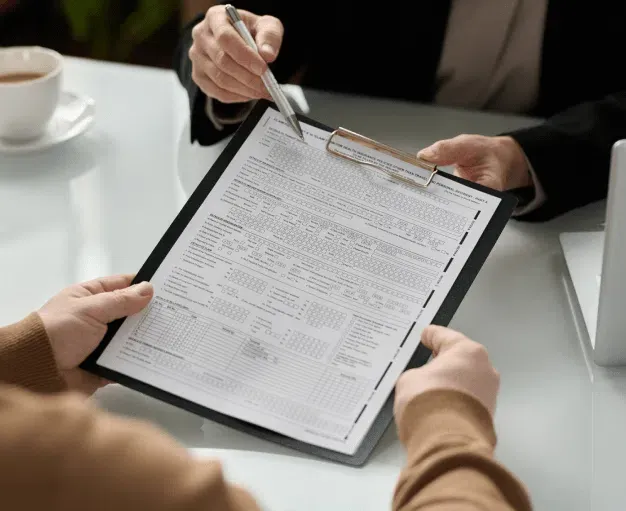
The first step is referred to as the petitioning phase. In this phase, your employer will need to fill out and submit Form I-129, as well as a contract and written statement from a peer group, occupational association, or similar advisory board, initiating the petition.
If the petition is approved, the application process begins. In this phase, you’ll need to fill out and submit Form DS-160, along with a photo, and pay a number of fees.
If you are over the age of 14, you will also need to schedule an interview at a U.S. embassy or consulate, where they will further review your eligibility, note the details of your contract, take samples of your fingerprints, and review a number of required documents, including your passport, contract, and itinerary, and proof that you paid all of the necessary fees.
If the officer is satisfied with your documentation and no further processing is required, the embassy or consulate officer will issue you a visa either at the pickup counter or by mail.
How Long Does an O-1 Visa Application Take to Process?
The duration of time between applying for and receiving your O-1 visa depends entirely on the location of the embassy and the timeliness with which you submit your documentation and schedule an interview.
However, you can generally expect to receive your visa anywhere between a few weeks and a few months — but no longer than a year.
O-1 Visa Premium Processing
For those seeking expedited processing, the USCIS offers a Premium Processing Service for certain visa categories, including the O-1 visa. This service allows applicants to pay an extra fee to have their application processed more quickly.
This expedited process can be invaluable for individuals with time-sensitive employment or engagement commitments.
O-1A Visa Frequently Asked Questions
What is an O‑1A visa in the U.S.?
The O‑1A visa is a nonimmigrant visa for individuals who have demonstrated extraordinary ability in science, business, education, or related fields, meaning they are among the small percentage at the very top of their field.
Who is eligible for an O‑1A visa?
Applicants must demonstrate extraordinary ability through sustained national or international acclaim, supported by documented achievements and professional recognition in their field.
How do I qualify for an O‑1A visa petition?
Eligibility is established by meeting the regulatory criteria through evidence such as major awards, published work, original contributions of significance, distinguished memberships, or high remuneration compared to others in the field.
What is the difference between O‑1A and O‑1B visas?
O‑1A is for science, business, education, and related fields, while O‑1B is for arts, motion pictures, or television.
What are the O‑1A visa criteria for extraordinary ability?
USCIS evaluates evidence such as major awards, published scholarly or professional work, leadership or critical roles, original contributions of major significance, and professional recognition.
What documentation is required for an O‑1A visa application?
Required documentation generally includes Form I‑129, supporting evidence, contracts or an itinerary of events, recommendation letters, and a peer advisory opinion where applicable.
How long does the O‑1A visa process take in the U.S.?
Processing times vary depending on USCIS workload and case complexity. Premium processing is available and guarantees USCIS action within 15 calendar days.
What are the stages of the O‑1A visa process?
Stages include gathering documentation, submitting the I-129 petition, USCIS review, RFE response (if needed), and visa stamping at a U.S. consulate.
Can you provide O‑1A visa case examples?
O‑1A beneficiaries often include scientists, business executives, researchers, educators, and other professionals with recognized publications, awards, or innovative contributions.
How should I prepare an O‑1A petition portfolio?
Include recommendation letters, proof of awards, publications, press coverage, professional memberships, and documentation of major contributions.
What are the approval rates and tips for O‑1A petitions?
Approval depends on the strength, organization, and credibility of the evidence submitted. Clear documentation demonstrating extraordinary ability is critical to a successful petition.
What are common reasons O‑1A petitions are denied?
Denials often result from insufficient evidence, unclear documentation, lack of advisory opinion, or failure to demonstrate extraordinary ability.
How do I request a consultation for O‑1A visa review?
Contact a qualified O‑1A immigration attorney to review your credentials, assess eligibility, and plan a petition strategy.
How does O‑1A compare to EB‑1 green card eligibility?
O‑1A is a nonimmigrant visa for temporary work, while EB‑1 is an immigrant visa leading to permanent residency for individuals of extraordinary ability.
How can I renew or extend an O‑1A visa in the U.S.?
Extensions are possible in one-year increments with evidence of continued extraordinary work and based on continued qualifying work or ongoing projects; your attorney can help prepare the extension petition.
O-1B Visa Frequently Asked Questions
What is an O‑1B visa and who qualifies?
An O‑1B visa is for individuals with extraordinary ability in the arts, entertainment, or motion picture/television industry. Applicants must demonstrate sustained national or international acclaim.
What are the eligibility requirements for an O‑1B visa?
Applicants must meet the evidentiary criteria outlined in the O‑1 regulations, demonstrating distinction or extraordinary ability through documented achievements and professional recognition.
How does the O‑1B visa application process work?
The process involves filing Form I-129 with USCIS, submitting supporting evidence, obtaining a consultation letter, and attending a visa interview if applying from outside the U.S.
What is the difference between O‑1A and O‑1B visas?
O‑1A is for individuals with extraordinary ability in science, education, business, or athletics, while O‑1B is specifically for the arts and entertainment sectors.
How can I prove extraordinary ability for an O‑1B visa?
Evidence may include awards, published critiques, media coverage, leading or critical roles in distinguished projects, expert opinion letters, or demonstrated commercial success showing distinction in the field.
How long does it take to get an O‑1B visa?
Processing typically takes 2–3 months for regular processing. Premium processing is an optional service where USCIS guarantees action on the petition within 15 calendar days, which may include approval, denial, or a request for additional evidence.
What are common reasons O‑1B visas are denied?
Denials often occur due to insufficient evidence of extraordinary ability, missing consultation letters, incomplete forms, or lack of a qualifying employer petition.
What documents are needed for an O‑1B visa application?
Key documents include a completed I-129 petition, consultation letter from a relevant peer group, contract or job offer, evidence of extraordinary ability, and supporting recommendation letters.
Who can apply for an O‑1B visa?
O‑1B beneficiaries commonly include artists, entertainers, performers, musicians, directors, and professionals working in the motion picture or television industry.
How do I renew an O‑1B visa?
Extensions generally require filing a new or amended Form I‑129 with updated evidence and a continued or new itinerary. Extensions are often granted in one‑year increments.
How does an O‑1B visa compare to a P‑1 visa for performers?
O‑1B requires proof of extraordinary ability and acclaim, while P‑1 is for internationally recognized performers or athletes, typically requiring membership in a recognized group or team.
What is premium processing for an O‑1B visa?
Premium processing is an optional service where USCIS guarantees processing within 15 calendar days for an additional fee.
How much does an O‑1B visa cost?
Costs include USCIS filing fees, optional premium processing fees, and attorney or documentation costs. Government filing fees are subject to change.
What are interview tips for an O‑1B visa?
Applicants should bring all supporting documents, be prepared to discuss their achievements and role in the project, and clearly demonstrate their extraordinary ability.
What is the O‑1B visa timeline from petition to approval?
Regular processing takes several months. Premium processing is an optional service where USCIS guarantees action on the petition within 15 calendar days, which may include approval, denial, or a request for additional evidence. If the applicant is outside of the U.S., then consular processing will be next after the I-129 approval.
Applying for an O-1 Visa? Call an O-1 Visa Lawyer
O-1 visas are typically reserved for the most elite and talented people working within their respective fields. This means that proving your eligibility for an O-1 visa may be especially challenging.
If you need help working through the paperwork, documentation, and scheduling issues that arise during the O-1 application process, consider enlisting the help of an immigration lawyer specializing in O-1 cases.
Naya Immigration has years of experience working one-on-one with employers to make sure their petition strategies are sound. Get in touch with us and we’ll get to work for you.
Disclaimer
The information on this website is for general information purposes only and does not constitute solicitation or provision of legal advice. Viewing information on this website and/or contacting Naya Law Group, PC does not establish an attorney-client relationship. This blog should not be used as a substitute for obtaining legal advice for any individual case or situation from an attorney licensed or authorized to practice in your jurisdiction.