

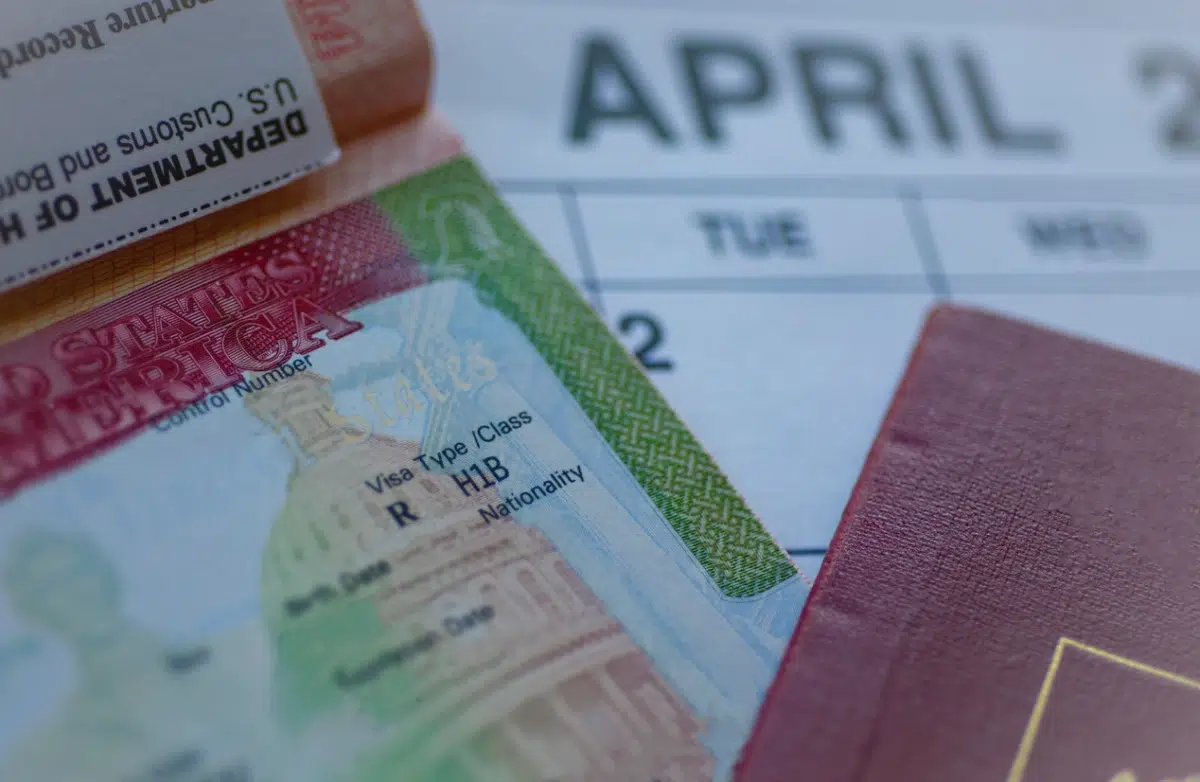

The H-1B visa is one of the most common pathways for businesses to acquire foreign workers in specialty occupations. However, since 2025, this employment immigration program has undergone profound changes. These alterations have significantly restricted this option for business immigration.
An H-1B visa attorney in San Jose can help American employers secure H-1B workers’ visas.
Recent Legislative and Regulatory Shifts Impacting the H-1B Program
The Immigration and Naturalization Act is a sprawling set of laws that governs immigration, including the visa-acquisition process. While Congress has considered proposed legislation to change the H-1B visa policies and implementation, this bill hasn’t yet passed. Instead, all of the changes to the H-1B visa policies and rules have occurred at the agency level.
President Trump issued a proclamation changing the government’s approach to nonimmigrant workers in the country, and, as a result, the Department of Homeland Security (DHS) has adjusted the regulations governing the process of issuing H-1B visas.
The president’s proclamation announced several steps, including increasing fees, preparing rules that prevent misuse of business visitor visas by H-1B visa recipients, and identifying which specialty occupation workers serve the national interest and don’t pose a threat to U.S. security. Another step is to adjust the “prevailing wage levels” used to categorize the jobs for which petitions are issued.
Evolving Cap Rules, Lottery Mechanics, and Strategic Workforce Planning
In accordance with the president’s proclamation, DHS made or proposed several rule changes.
The application fee has increased significantly. The petitioning employer may be required to pay $100,000 for each H-1B worker visa petition in certain scenarios.
As a practical matter, this change penalizes companies that use lower-paid alien workers to replace higher-paid American workers by imposing a premium on H-1B petitions. It also enacts one of the president’s primary H-1B visa policies to reduce the number of petitions since many companies can’t afford to pay multiple $100,000 petition fees.
Likewise, the lottery shifts from a random-selection to a weighted-selection process. This change is intended to give higher-skilled and higher-paid aliens an advantage in selection.
More specifically, petitions are categorized by wage levels. Petitions for the highest wages, Level 4, have the best chance of being chosen. Petitions for workers paid entry-level wages, Level 1, have the lowest chance of being chosen.
Again, the goal is to narrow the types of workers admitted into the country to those who fill specific needs. In combination with the increased fees, this change also pushes companies to be more selective in the petitions they file to focus on those foreign workers in professions that are more likely to be approved.
Additionally, USCIS revised the “specialty occupation” H-1B definition. Under the H-1B cap registration updates, the agency requires employers to prove that a position for which an H-1B visa is sought normally requires a bachelor’s degree in a specified field.
H-1B employer requirements for specialty occupations don’t always mandate a bachelor’s degree. As long as a bachelor’s degree is typical, the job can qualify as a specialty occupation open to an H-1B visa worker.
However, the department also clarified that the worker’s field of study must “directly relate” to the position’s job duties. In other words, employers must submit supporting evidence that establishes a direct relationship among the worker’s educational qualifications, their field of study, and the position’s needs.
The fee provisions apply to both H-1B cap-subject and cap-exempt petitioners. However, cap-exempt petitioners can obtain a national interest fee waiver. The changes to the lottery, by definition, only apply to petitions subject to the H-1B cap.
The alterations to the fee provisions took effect in 2025, starting with the fiscal year 2026 H-1B cap registration season. The lottery selection process became effective on February 27, 2026, and applies to the 2027 H-1B cap season. This period opened on March 4, 2026, and closes at noon, Eastern Daylight Time, on March 19, 2026.
While the net results of these H-1B lottery changes have yet to be determined, the overall goal is to reduce the total number of visas issued and limit H-1B visas to higher-skilled workers. Therefore, companies must now engage in more strategic workforce planning.
Employers will need to fill lower-level positions with American workers, as the odds of having those petitions selected drop significantly. Instead, businesses will need to save their petitions and petition fees for highly paid aliens in high-skill positions.
Enhanced Registration Requirement and H-1B Petition-Filing Standards
Another of the president’s H-1B visa policies is intended to increase the integrity and security of the petition process. The enhanced registration requirement is satisfied through USCIS’s online system. It serves two distinct purposes.
First, the new H-1B visa policy changes require registrations for unique beneficiaries. Beneficiaries and employers can no longer gain additional entries into the lottery system by submitting multiple registrations for the same beneficiary. This change only applies to H-1B cap subject petitions.
Second, USCIS has additional tools for verifying petitioners and employers. These changes apply to both cap-subject and cap-exempt petitions. Employers must submit valid passport information, start dates, and travel documents for every beneficiary.
If the prospective employer enters incorrect information, USCIS can reject the petition. It can also deny petitions where the registration fee is declined. Consequently, petitions must contain complete and accurate information to reach the selection stage.
On the other hand, the start date rules have been clarified to allow start dates beyond the fiscal year in which the petition was submitted. For example, a petition filed for a FY 2027 H-1B visa can have a start date on or after October 1, 2027.
Executive Actions and Entry Restrictions Affecting Nonimmigrant Workers
It’s important to understand the scope of these executive actions and the Presidential Proclamation. Since Congress passed the Immigration and Naturalization Act, only Congress can amend these statutes.
The executive branch, through the Department of Homeland Security and the agencies under it, such as USCIS, can’t pass rules that contradict, limit, or expand Congressional acts. They’re constrained to passing laws that interpret and enforce those laws.
However, the power these agencies wield is fairly broad. The new H-1B visa rules might seem like big changes. For example, a $100,000 petition fee may appear objectively unreasonable. However, courts have determined that the rule falls within the agency’s authority because Congress never specified that it couldn’t implement such a fee.
Importantly, this means that these new H-1B employer requirements will likely stand unless Congress acts to counter them. Courts typically resolve complaints about agency rules by siding with the agency and stating that Congress has the power to change the laws if it disagrees with the agency’s rules.
For this reason, employers should plan to comply with these new eligibility and petition requirements. The courts have generally taken the position that they won’t step in to block these rules, and any action Congress takes will happen slowly, if at all.
Heightened Enforcement, National Security Screening, and Employer Liability
Despite the government’s stepped-up immigration enforcement, the USCIS H-1B regulation updates don’t focus on increased enforcement and compliance. Although employers won’t see new rules, they will see more scrutiny in three respects.
First, USCIS will review petitions more carefully. These reviews will include national security verification to ensure that the worker doesn’t have anything in their history suggesting that they pose a risk of violence or espionage.
One of the more controversial requirements under this expanded scrutiny is that beneficiaries and their families must make their social media profiles public so their posts can be openly examined.
Second, the Department of Labor is taking additional steps to assess the labor market and any representations that employers make about wages. This review, called Project Firewall, may make it more difficult to obtain a Labor Condition Application (LCA).
Additionally, the department will examine whether your company has done any of the following:
- Displaced American workers or given preference to foreign workers over U.S. workers
- Failed to recruit American workers before resorting to the H-1B process
- Inaccurately described job duties, wages, working conditions, or position requirements
Furthermore, the Labor Department will investigate any reports of retaliation against employees who report employers for petition violations.
Third, USCIS will increase its enforcement activities. Employers should plan for additional site visits, Requests for Evidence (RFEs), and fraud investigations. For example, an employer that pays a wage different from the wage listed in the petition might face an enforcement action based on the H-1B wage-level requirements.
Employers found to have violated the H-1B visa program requirements could face debarment from the program, back wages, and civil monetary penalties. Because of the severity of these potential repercussions, businesses should consult an H-1B RFE response attorney when confronted with an enforcement investigation or action.
Status Maintenance, Portability, and Forward-Looking Compliance Strategies
The changes in the petition process necessarily carry over into the maintenance, portability, and renewal processes.
Portability between cap-exempt employers will remain the same. Employees moving from a cap-exempt to a cap-subject employer may be impacted by several H-1B transfer-process changes, including the requirement that cap-subject employers file an electronic registration.
Although the rules have remained unchanged for maintaining status as an H-1B visa holder, the enforcement priorities have changed. Site visits to employers may include an investigation into whether any H-1B visa holders have committed any of the following violations:
- Changed employers
- Changed job positions or locations with the same employer
- Overstayed their visas
All of these violations can be prevented by consulting an H-1B immigration lawyer in San Jose. H-1B visa holders won’t automatically lose their visas by changing employers, job locations, or positions. However, the beneficiary must work with their current or new employer to file a petition with USCIS before or at the time of the change.
The procedure for extending H-1B visas beyond their initial three-year term hasn’t changed. However, regarding H-1B extension, new policies include increased enforcement to verify that neither the employer nor the employee has violated any of the visa’s terms.
Moreover, extension petitions will be more carefully scrutinized, particularly if they were granted before 2025, to ensure that they meet the current H-1B visa policies.
Forward-looking H-1B visa compliance for employers seeking to retain foreign workers should focus on the following steps:
- Carefully drafting job requirements and researching wages
- Filing non-immigrant worker petitions anytime H-1B visa holders change jobs or job duties
- Keeping copies of all evidence obtained from beneficiaries and submitted to USCIS
- Documenting the worker’s position and pay
Your business may already have a compliance program in place. If it doesn’t, consider consulting a qualified attorney to discuss how to implement a visa-compliance program.
Contact Naya Immigration to Discuss Your H-1B Visa Program
The H-1B process has changed drastically and will likely undergo additional revisions over the next few years. As such, visa compliance will likely become highly complex and may even shift while your business is in the middle of the process.
An H-1B visa attorney in San Jose can help you stay up to date on new developments in the H-1B visa policies, laws, regulations, and enforcement priorities.
Your attorney can prepare petitions, ensure that you and your prospective employee provide proper evidence to support the petition, and meet all of the requirements once the petition is granted. They can also explain your options for dealing with RFEs or denials, including alternate ways of bringing qualified workers to the U.S.
The knowledgeable attorneys at Naya Immigration have the experience to deal with USCIS once your employee enters the U.S. An H-1B visa-renewal attorney in San Jose can verify that you and your worker have maintained compliance with the laws and regulations governing the process of renewing an H-1B visa.
Furthermore, If USCIS or the Labor Department identifies any potential issues with your company or worker, your lawyer will be there to protect your interests during the investigation and any subsequent enforcement action.
Since our firm’s founding in 1978, we’ve helped hundreds of companies address their immigration issues. Contact us to discuss your company’s needs and how we can assist you in meeting them.